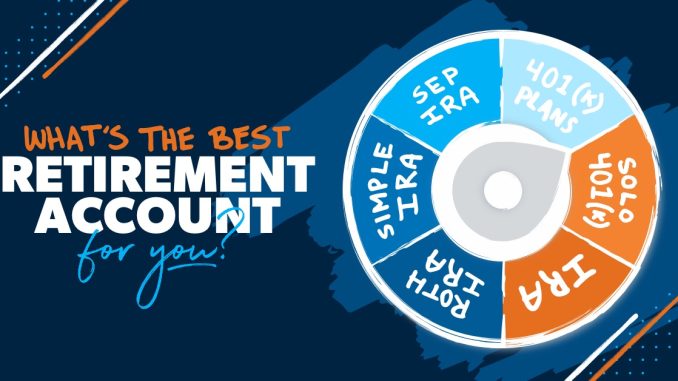
🧾 Introduction
If you’re self-employed, a freelancer, or a business owner, saving for retirement is 100% your responsibility.
The good news? In 2025, you have multiple retirement account options — with higher contribution limits and major tax advantages.
This guide breaks down:
-
The best retirement plans for self-employed individuals
-
2025 contribution limits
-
Key differences: SEP IRA vs Solo 401(k)
-
How to choose the right one
-
Tips to lower your tax bill while growing your future wealth
Whether you’re a solopreneur earning $30k/year or running a six-figure consulting business — setting up the right retirement plan can reduce taxes and supercharge your savings.
Let’s compare your best options in 2025.
📌 Why Retirement Planning Matters for the Self-Employed
-
No employer match or pension → it’s all on you
-
IRS offers big tax deductions for solo savers
-
Compounding interest rewards early action
-
Reduces taxable income now + builds wealth later
-
Helps qualify for mortgages and future credit
🏆 Best Self-Employed Retirement Plans in 2025
1. SEP IRA (Simplified Employee Pension)
-
Best For: Solo workers or business owners with few/no employees
-
Contribution Limit (2025): Up to 25% of compensation, max $69,000
-
Tax Treatment: Pre-tax contributions = immediate tax deduction
-
Setup: Simple via brokerages like Fidelity, Vanguard, Schwab
-
Withdrawals: Taxed at retirement (Traditional IRA rules)
✅ Pros:
-
Easy to set up
-
High contribution limit
-
Flexible funding schedule (fund anytime before tax deadline)
🚫 Cons:
-
Must contribute equal % to employees if you have staff
-
No Roth option
2. Solo 401(k) (AKA Individual 401(k))
-
Best For: High-income solopreneurs or married business owners
-
Contribution Limit (2025):
-
$23,000 employee deferral +
-
25% of compensation as employer = up to $69,000 total
-
+$7,500 catch-up if age 50+
-
-
Roth Option: ✅ Available
-
Loans: ✅ Up to $50,000
-
Setup: More paperwork, but powerful
✅ Pros:
-
Highest contribution flexibility
-
Roth and pre-tax options
-
Loan availability
🚫 Cons:
-
More complex setup and annual filings (Form 5500-EZ if >$250k)
3. Traditional IRA
-
Best For: Beginners or side hustlers with lower income
-
Contribution Limit (2025): $7,000 (under 50), $8,000 (50+)
-
Tax Treatment: Pre-tax if eligible (deductible), taxed at retirement
-
Setup: Extremely simple via any brokerage
✅ Pros:
-
Easy to start
-
Great for side hustlers or new freelancers
-
Can combine with other plans
🚫 Cons:
-
Low limit compared to SEP or Solo 401(k)
4. Roth IRA
-
Best For: Tax-free retirement growth + flexible withdrawals
-
Contribution Limit (2025): $7,000 / $8,000 (age 50+)
-
Income Limits: Phases out above $153,000 (single)
-
Tax Treatment: Post-tax contributions, tax-free growth and withdrawals
✅ Pros:
-
Tax-free growth
-
No RMDs
-
Can withdraw contributions anytime
🚫 Cons:
-
Income limits
-
Contributions not tax-deductible
📊 Comparison Table – Self-Employed Retirement Plans (2025)
| Plan | Max Contribution | Roth Option | Best For | Complexity |
|---|---|---|---|---|
| SEP IRA | $69,000 | ❌ | Solopreneurs, easy setup | Low |
| Solo 401(k) | $69,000 + $7,500 | ✅ | High earners, flexible control | Medium |
| Traditional IRA | $7,000 / $8,000 | ❌ | Beginners | Very Low |
| Roth IRA | $7,000 / $8,000 | ✅ | Long-term tax-free growth | Very Low |
💸 Which Retirement Plan Should You Choose?
👉 Choose SEP IRA if:
-
You’re solo or have very few employees
-
You want simple setup + high deduction
-
No need for Roth or loans
👉 Choose Solo 401(k) if:
-
You want to maximize contributions
-
You want Roth + traditional mix
-
You’re disciplined with paperwork
👉 Choose Roth IRA if:
-
You want tax-free growth
-
You’re under income limits
-
You want withdrawal flexibility
🧮 Tax Benefits of Self-Employed Retirement Plans
-
Contributions = “above the line” deductions
-
Lowers adjusted gross income (AGI)
-
Helps qualify for premium tax credits or reduce Medicare premiums
-
SEP and Solo 401(k) reduce self-employment tax liability
📌 Example: A $30,000 SEP IRA contribution could reduce taxable income by $30,000 and save up to $9,000+ in federal taxes.
🛠 How to Open a Retirement Plan in 2025
Step-by-Step:
-
Choose a platform (Fidelity, Vanguard, Schwab, RocketDollar, etc.)
-
Submit EIN and business info
-
Fund account (bank transfer or check)
-
Track contributions
-
File properly (e.g., Form 5500-EZ for Solo 401(k) over $250k)
💡 Use tools like Catch, Lili Bank, or Keeper Tax to automate contributions and tracking.
⚠️ Common Mistakes to Avoid
-
❌ Missing contribution deadlines (April 15 or extension)
-
❌ Forgetting to file Form 5500 for large Solo 401(k)
-
❌ Not maximizing tax deductions
-
❌ Using retirement funds for business expenses
-
❌ Not diversifying between Roth and Traditional
🧠 Final Thoughts
Being self-employed means freedom — but it also means no employer pension or retirement match.
The good news? You get access to some of the most powerful retirement plans available, with contribution limits much higher than the average employee gets.
In 2025, the smartest move is to:
-
Start with a Roth or Traditional IRA
-
Move to SEP IRA if you want simple, higher contributions
-
Graduate to Solo 401(k) for full flexibility and tax strategy
Don’t wait until your 40s or 50s. With compound interest, the earlier you start, the bigger the outcome.
📌 Pro tip: Combine plans! You can contribute to both a Solo 401(k) and a Roth IRA if you qualify.
Plan now, save consistently — and let time and smart tax planning work for you.
Leave a Reply